GonzaloMunévar

WriterPhilosopherNeuroscientist

Galileo drives a dagger through the heart of empiricism.

A Theory of Wonder, Vernon Press, 2021
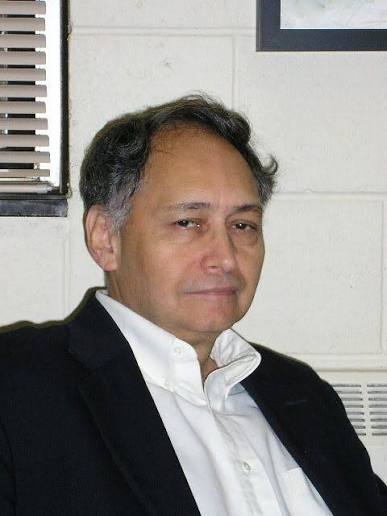
Gonzalo Munévar

In his own words

The Dimming of Starlight: The Philosophy of Space Exploration — Gonzalo Munévar, Oxford University Press, 2023

Gonzalo Munévar is a retired university professor. He has a Ph.D. from Berkeley in philosophy of science, a field in which he has published eight research books and articles with some of the top academic publishers, including his recent A Theory of Wonder.

He began publishing magical realism and poetry at a young age in his native Colombia. His first novel, The Master of Fate, received the Black Heron Press Award for Social Fiction and was published by that press in 2000. His second novel, Alex in Femiland, is very controversial.

He is now completing a book on space exploration, as well as working on another novel, short stories, poetry, and screenplays. Apart from writing, for several years he has been doing experimental research in neuroscience. Today he lives in Michigan with his wife.

AmazonOxford

Books

Papers

79 articles and chapters, 1979–2025, in English, Spanish, German and Polish. Titles link to the publisher of record; ★ marks a free full text.

2025 Humankind in Outer Space★with Phillip McMurray · Space Education & Strategic Applications 5(2)
2024 Feyerabend, Plato and Aristotlein Feyerabend in Dialogue · Boston Studies, Springer, 21–31
2023 Feyerabend: The Most Valuable Philosopher of the Twentieth Century★with Phillip McMurray · Filozoficzne Aspekty Genezy 20(2)
2022 The Origin of Modern Physical Science★passages from A Theory of Wonder · Filozoficzne Aspekty Genezy 19(2)
2021 Future space missions and human enhancement: Medical and ethical challenges★with Szocik, Shelhamer, Braddock, Cucinotta, Impey, Worden et al. · Futures 133, 102819
2020 A cellular and attentional network explanation of consciousnessConsciousness and Cognition 83, 102982
2020 Science and Ethics in the Human-Enhanced Exploration of Marsin Human Enhancements for Space Missions · Springer, 113–124
2019 Biology and Gettier’s Paradox★Studia Humana 8(1), 93–98
2019 An obligation to colonize outer spaceFutures 110, 38–40
Read more — 69 earlier papersShow fewer
2019 The Great Colonization Debate15 authors, lead Kelly C. Smith · Futures 110, 4–14
2019 Science and Ethics in the Exploration of Marsin The Human Factor in a Mission to Mars · Springer, 185–200
2018 Science as Radical Knowledge★Límite (Arica) 13(41), 17–28
2018 Bipolar Disorder as Failure of Interhemispheric Inhibition★with Alyssa Shaver and Matthew L. Cole · Límite 13(43), 80–88
2018 Epistemología Evolucionista★in Teorías Epistemológicas y Educativas Latinoamericanas, 43–49
2016 Historical Antecedents to the Philosophy of Paul FeyerabendStudies in History and Philosophy of Science A 57, 9–16
2016 Space Colonies and Their Criticsin The Ethics of Space Exploration · Springer, 31–46
2016 Fiction in the Brainin Questions of Character · Oxford University Press, 415–432
2014 fMRI Study of Self vs. Others’ Attributions of Traits Consistent with Evolutionary Understanding of the Self★with Cole, Ye, Yang, Zheng, Krishnamurthy & Haacke · Neuroscience Discovery 2(1):3 · principal investigator
2014 Damasio, Self and Consciousness★Philosophia Scientiae 18(3), 191–201
2014 Space Exploration and Human SurvivalSpace Policy 30(4), 197–201
2013 Neuroscientific Evidence against Depression as an Evolutionary Adaptation★with Donna Irvan · Psychology Research 3(6), 358–363
2013 Neuroscientific Critique of Depression as Adaptationwith Donna Irvan · Int. Conf. on Brain-Mind Proceedings · BMI Press
2013 Understanding the Self Biologicallywith Yi Zheng · Brain-Mind Magazine, Spring 2013
2012 Self-Reproducing Automata and the Impossibility of SETIin Imagining Outer Space · Palgrave Macmillan, 267–284; 2nd ed. 2018, 293–312
2012 Homosexuality and Darwinism★in Sex, Reproduction and Darwinism, 95–107
2012 The Myth of Dual Consciousness in the Split Brain★Int. Conference on Brain-Mind Proceedings · BMI Press
2011 A Darwinian Account of Self and Free Willin Evolution 2.0 · Springer Frontiers Collection, 43–63
2011 Reznick’s Interpretation of Darwin’s OriginThe European Legacy 16(3), 399–401
2011 Einstein y el límite de la velocidad de la luzin Einstein: Científico y Filósofo · Univ. del Valle, 291–308
2010 Perception and Natural Selectionin The European Mind · Malta University Press, 222–229
2008 Humankind in Outer SpaceInt. J. of Technology, Knowledge and Society 4(5), 17–25
2008 El Cerebro, el Yo, y el Libre Albedríoin Entre Ciencia y Filosofía · Univ. del Valle, 291–308
2008 A Distributive Explanation of ‘Grandmother’ CellsProc. XXII World Congress of Philosophy 34, 25–31 (pub. 2012)
2007 Nuevas Ventanas hacia el Cerebro Humano y su Impacto en la Neurociencia Cognoscitiva★with Oscar Sierra-Fitzgerald · Revista Latinoamericana de Psicología 39(1), 143–167
2006 Venus y el Fin del Mundo★Eidos 4, 10–25
2006 El Filósofo más valioso del sigloin Variaciones sobre Temas de Feyerabend · Univ. del Valle, 27–42
2005 Realismo, Verdad y Relativismo Evolutivo★Praxis Filosófica n.s. 20, 5–30
2005 Consenso y evolución en ciencia★Praxis Filosófica 20, 167–183
2004 La Epistemología Evolutiva de Karl Popperin Hipótesis y Verdad en Ciencia · Editorial Complutense, 49–66
2003 Sandra Harding’s Feminist Epistemology and Political Correctnessin Scrutinizing Feminist Epistemology · Rutgers UP, 142–156
2003 A Plea to Fuller for a Rosetta StoneSocial Epistemology 17(2–3), 241–246
2002 Conquering Feyerabend’s Conquest of Abundancecritical notice · Philosophy of Science 69(3), 519–536
2002 Reflections on Hull’s Remarksin Prematurity in Scientific Discovery · University of California Press, 342–346
1999 Feyerabend, Preston, and Analytic PhilosophyMetascience 8(2), 216–226
1998 A Rehabilitation of Paul Feyerabendappendix to Evolution and the Naked Truth, 219–244; reprinted in The Worst Enemy of Science?, OUP 2000, 58–79
1998 Relativismo y Universalismo Culturalesin Filosofía de la Cultura · Enciclopedia Iberoamericana de Filosofía, Trotta, 213–223
1998 A Naturalistic Account of Free WillDiálogos (Río Piedras) 33(72), 43–62
1997 Philosophy and Exploration of the Solar SystemPhilosophic Exchange 28, 56–61
1995 Bohr and Evolutionary RelativismExplorations in Knowledge XII(2), 1–10
1992 New Directions, Really?PSA 1992, vol. 2, 341–350
1991 Science in Feyerabend’s Free Societyin Munévar, ed., Beyond Reason · Kluwer, 179–198
1991 Evolution and the Naked Truthin Cultural Relativism and Philosophy · E. J. Brill, 177–194
1989 Science as Part of Naturein Issues in Evolutionary Epistemology · SUNY Press, 475–487
1989 Human and Extraterrestrial ScienceExplorations in Knowledge 6(2), 1–9
1989 Naturalismo Prescriptivo★Revista de Filosofía (Madrid) 2, 31–42
1988 Evolution and JustificationThe Monist 71(3), 339–357
1988 Hull, Straight Biology and Straight EpistemologyBiology and Philosophy 3(2), 209–214
1988 Filosofía y la Evaluación de la Tecnología Espacial★Arbor (CSIC) 509, Tomo CXXX, 59–72
1988 Comment on Margolis’ Pragmatic RealismSocial Epistemology 2(3), 240–243 · part of the “In Defense of Relativism” symposium
1987 Peter Singer’s The Expanding CircleExplorations in Knowledge, Spring 1987, 43–50
1986 Space Colonies and the Philosophy of Space Explorationin Space Colonization: Technology and the Liberal Arts · AIP Conf. Proc. 148, 2–12
1986 Consensus and Evolution in Sciencein PSA 1986, vol. II, 120–129
1986 Philosophy, Space Science and the Justification of Space Explorationin Essays on Creativity and Science · HCTE Hawaii, 89–96
1986 Pecking Orders and the Rhetoric of ScienceExplorations in Knowledge III(2), 43–48
1985 Rhetorical Grounds for Determining what is Fundamental Science: The Case of Space Explorationin Argument and Social Practice · Speech Communication Assoc., 420–434
1984 Report of an Interdisciplinary Course on Space Explorationwith John C. Kasher · Social Sciences and Space Exploration · NASA EP-192
1984 Towards a Future Epistemology of ScienceExplorations in Knowledge I(1–2), 1–17
1983 The Connection between Evolution and the Nature of Scientific Knowledgein Radiation and Cellular Response · Iowa State UP, 213–222
1983 In the Lion’s Den: Taming Methodology into Oblivion7th Int. Congress of Logic, Methodology and Philosophy of Science, Salzburg
1982 Allowing Contradictions in ScienceMetaphilosophy 13(1), 75–78
1982 Toward a Social Conception of Scientific Rationality★Transactions of the Nebraska Academy of Sciences X, 91–95
1982 The Death Penalty: The Relevance of Deterrencewith Jerry Cederblom · Criminal Justice Review 7(1), 63–66
1980 Die Wissenschaft in Feyerabends freier Gesellschaftin Versuchungen: Aufsätze zur Philosophie Paul Feyerabends · Suhrkamp, Frankfurt
1980 Rejoinder to J. R. RavetzJ. of Social and Biological Structures 3(3), 301–302
1979 The Moral Autonomy of Science and the Recombinant DNA ControversyJ. of Social and Biological Structures 2(3), 235–243

Barranquilla to Berkeley

Born in Barranquilla, Colombia, in 1945, he began as a writer of magical realism and poetry before philosophy took him north.

He read a paper of Paul Feyerabend’s as an undergraduate at Northridge and went to Berkeley to study under him. They met in 1973, when Munévar tried to audit his seminar and was told that staying would require giving a presentation. That presentation became his dissertation. Feyerabend directed it, made him his teaching assistant, wrote the foreword to his first book, and remained his friend for the rest of his life.

He has taught at San Francisco State, Nebraska — where he held a named professorship — Evergreen, and Lawrence Technological University, with visiting years at Stanford, Edinburgh, Madrid, Barcelona, Santiago de Compostela, Newcastle and Kobe. He has given roughly two hundred talks in fifteen countries.

Born
1945, Barranquilla, Colombia
PhD
Philosophy, UC Berkeley, 1975
under Paul Feyerabend
Now
Professor Emeritus, Lawrence Technological University
Fields
Philosophy of science · Space exploration · Evolutionary biology · Neuroscience
Editor
Explorations in Knowledge, 1982–1996

Contact